Cyanobacteria
Coordinator: Jeremy McWhorter jeremy.mcwhorter@gmail.com
From the NHDES website:
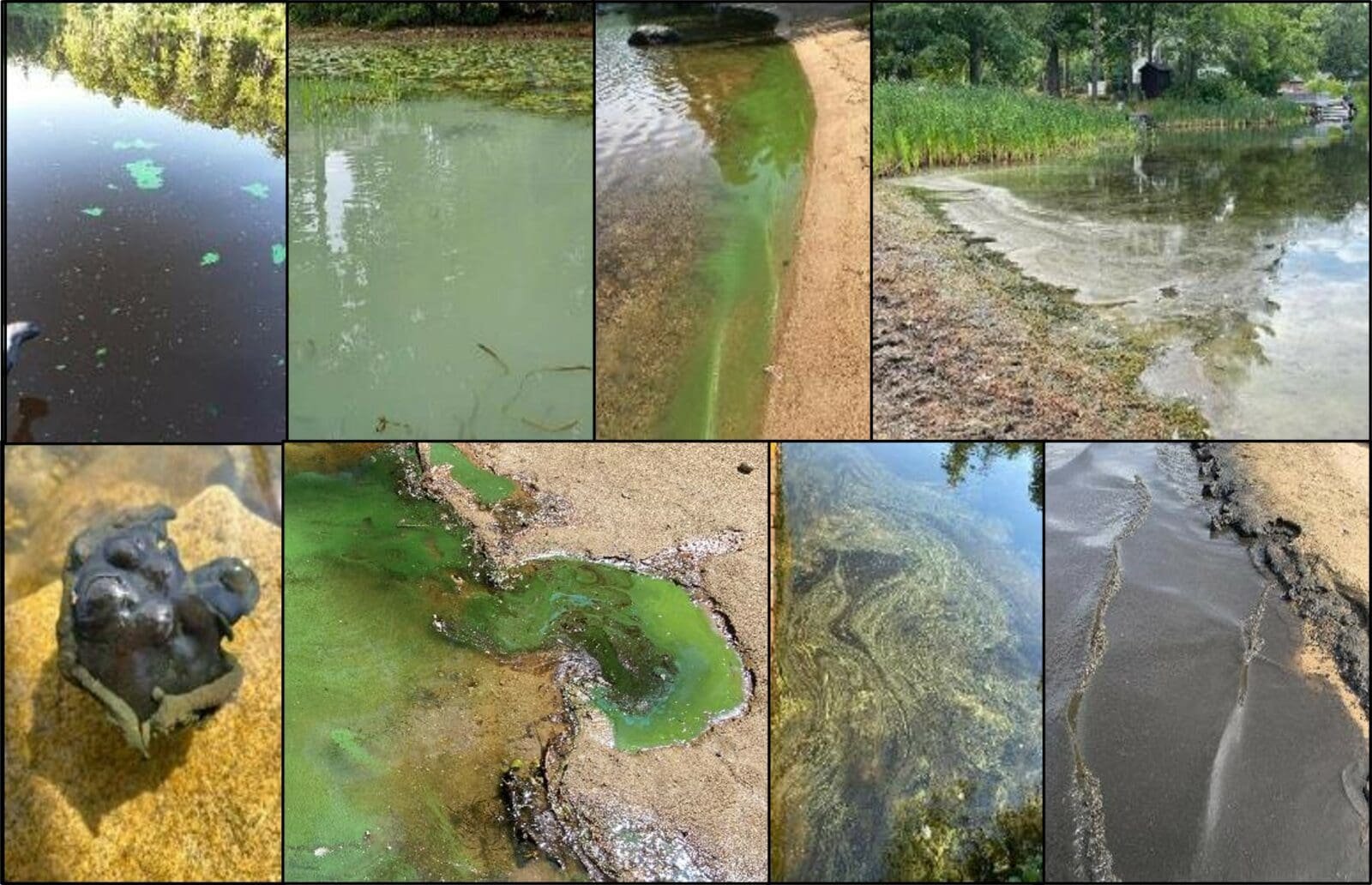
Cyanobacteria are normal, natural components of freshwater ecosystems but certain water conditions can cause them to grow out of control and form surface blooms. Cyanobacteria blooms are not unique to New Hampshire and are prevalent in many other states across the country and the world. These blooms are variously referred to as cyanobacteria harmful algal blooms, CyanoHABs or cyanobacteria blooms.
NHDES tracks cyanobacteria bloom reports on our Healthy Swimming Mapper, representing a static point in time. It is important for lake and coastal visitors to keep an eye out for cyanobacteria and assess the risk level before recreating; blooms are dynamic and can frequently move around a waterbody based upon wind, weather, boat traffic and lake morphology. NHDES does not close waterbodies but does recommend avoiding swimming in water in the vicinity of a bloom.
Cyanobacteria blooms can be harmful to pets, livestock, wildlife and people. For more information about human health effects of harmful algal blooms, visit the U.S. Environmental Protection Agency website.
Be on the lookout for cyanobacteria blooms, and if you see a potential bloom, report it to NHDES right away! If you’re unsure, reach out to Jeremy.
If you’re interested in volunteering for this program, or any other, please complete our Volunteer Form!